Centre for Artificial Intelligence
Funded Projects
1. Development of UAVs for Insect Detection at Agricultural Farms
Description: This research presents a significant step forward in advancing precision agriculture practices by integrating lightweight, high-performance vision models in edge devices. The Intelligent Edge Vision System (IEVS) not only offers practical benefits for farmers by enabling real-time, accurate pest detection but also contributes to the broader goal of sustainable agriculture by promoting efficient resource utilization and minimizing pesticide use.
Funded by: SRM SERI
Funding Amount: Rs 3,10,000/

2. Echo-Vision: Smart navigation glasses for the Blind
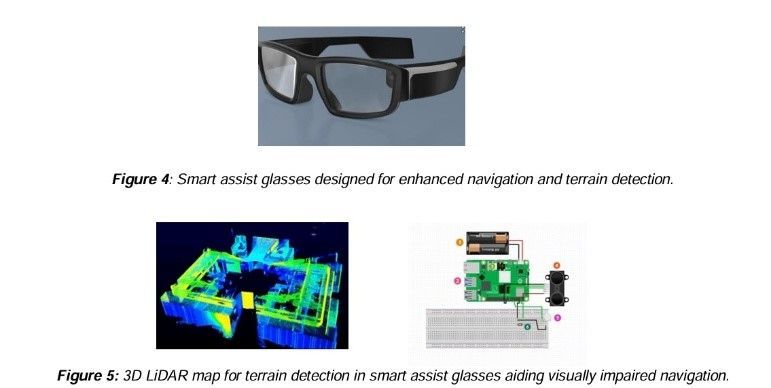
Description: Echo-Vision aims to develop a crown-shaped optical device designed to improve the safety and independence of visually impaired individuals using deep learning and computer vision. The device integrates a LiDAR sensor to generate real-time images of the surroundings, enabling precise object detection and obstacle avoidance, along with a GPS system to assist with navigation. By combining these technologies, the system addresses a critical challenge faced by visually impaired individuals—safe and independent mobility. Additionally, the device incorporates text-to-speech capabilities to convey environmental information to the user, allowing them to navigate different environments with greater confidence and autonomy, ultimately enhancing their overall quality of life
Funded by: IEEE EPICS
Funding Amount : $910 USD

3. Banana Weevil Detection
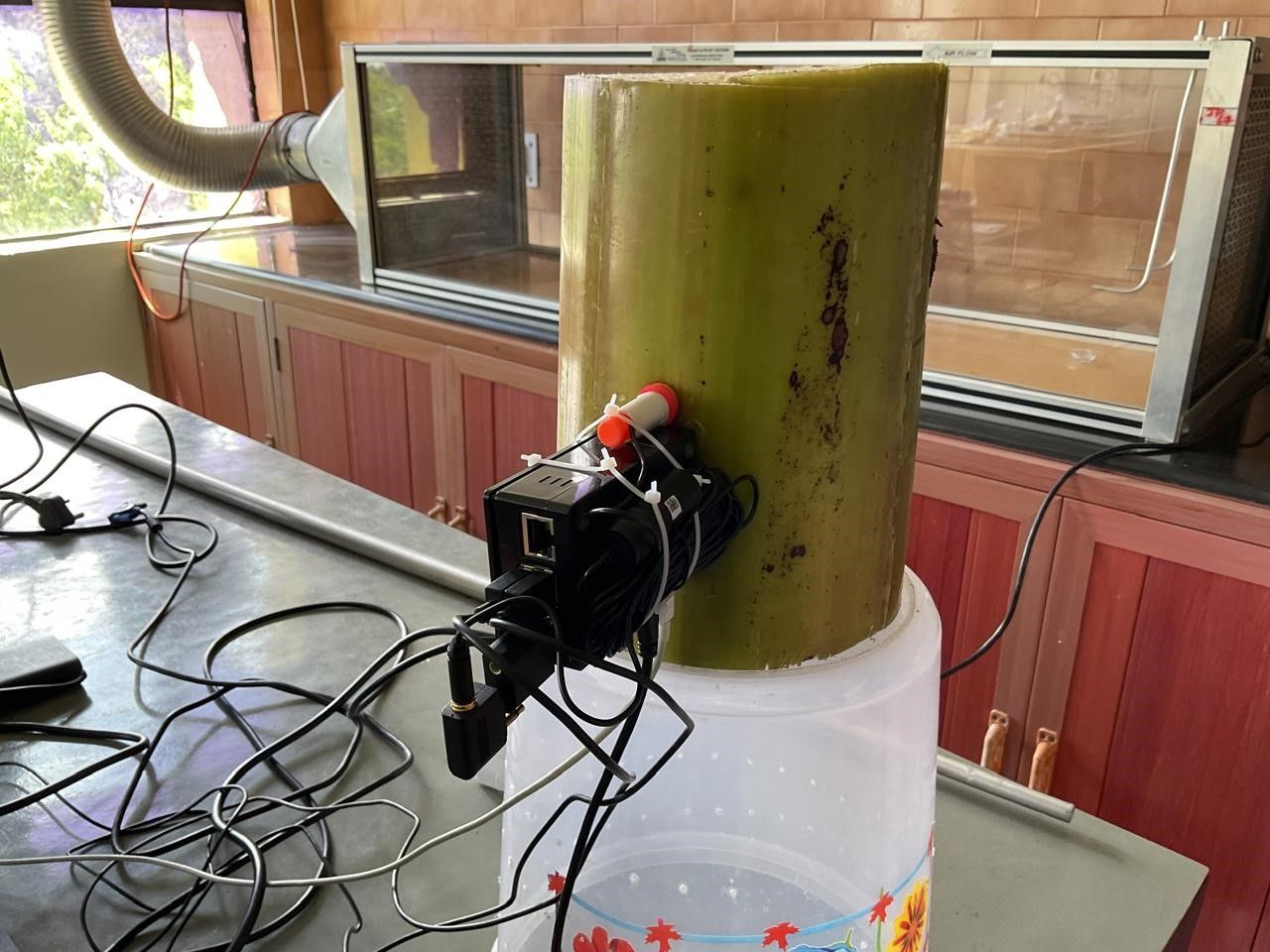
Description: The Banana Weevil Detection System is a field-deployable solution designed to identify infestations of the banana pseudostem weevil (Odiporus longicolus) within banana plants at an early stage. The system employs a dual-mode sensing approach that combines acoustic monitoring with resonance-based structural inspection. A probe-mounted microphone records internal feeding sounds produced by the larval stages inside the pseudostem. These audio signals are processed and converted into mel-spectrogram representations for analysis. A trained convolutional neural network model performs real-time inference to determine the presence and developmental stage of the pest. In parallel, a resonance hammer technique is used to gently tap the pseudostem surface and identify hollow tunnels formed by larval activity based on acoustic response. The integration of these two sensing mechanisms improves detection reliability under field conditions. The system is implemented on a Raspberry Pi platform for portable, on-site operation. Results are displayed through a simple interface that indicates infestation status and predicted larval stage. This approach enables early identification of internal damage that is otherwise difficult to observe externally. Early detection allows farmers to take timely control measures and reduce crop losses.
Funded by: SRMIST Trichy
Funding Amount : Rs 20,000/-